What Is Artificial Intelligence? A Complete Beginner’s Guide
Focus Keyword: What is Artificial Intelligence
SEO Title: What Is Artificial Intelligence? A Beginner’s Guide (53 characters)
Disclaimer: This article is intended for educational purposes. It provides a general overview of Artificial Intelligence and does not constitute professional or technical advice.
Artificial Intelligence is one of the most talked-about technologies of our time. However, many people are still unsure what it actually means. Therefore, this guide explains AI in plain, simple language. In addition, it covers how AI works, where it is used, and what the future may hold.
Whether you are a student, a professional, or simply a curious reader, this guide is for you. Furthermore, no technical background is required. By the end, you will have a clear and confident understanding of Artificial Intelligence.
What Is Artificial Intelligence?
Artificial Intelligence, commonly known as AI, refers to the ability of computers and machines to perform tasks that normally require human intelligence. For example, understanding language, recognising images, making decisions, and solving problems are all traditionally human abilities. However, AI enables machines to do all of these things.
In simple terms, AI is software that learns, reasons, and responds. Therefore, instead of following fixed instructions only, an AI system can adapt based on new information. Consequently, it becomes more useful and accurate over time.
The term “Artificial Intelligence” was first coined in 1956 by computer scientist John McCarthy. Since then, the field has grown rapidly. Today, AI is present in smartphones, hospitals, banks, schools, and businesses worldwide.
How Does Artificial Intelligence Work?
Understanding how AI works requires looking at three key concepts. First, there is data. AI systems learn from large amounts of data, such as text, images, numbers, and sound. Next, there are algorithms, which are sets of rules that tell the AI how to process that data. Finally, there is training, where the AI practises on data repeatedly until it becomes accurate.
For example, consider how AI learns to recognise a cat in a photo. First, it is shown thousands of cat images. Next, it identifies patterns such as ears, fur, and whiskers. Finally, when shown a new photo, it uses those patterns to make a prediction.
In addition, modern AI uses a technique called machine learning, where systems improve automatically through experience. Furthermore, a more advanced form called deep learning uses layers of connected networks — loosely inspired by the human brain — to handle complex tasks.
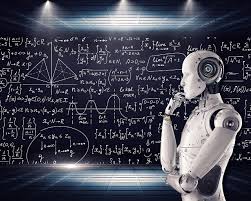
Types of Artificial Intelligence
AI exists on a spectrum. Therefore, it is helpful to understand the three main types.
Narrow AI (Weak AI)
Narrow AI is the most common type in use today. Specifically, it is designed to perform one task and one task only. For example, a voice assistant like Siri answers questions but cannot drive a car or write a report. Therefore, it is powerful within its area but limited beyond it.
General AI (Strong AI)
General AI refers to a system that can perform any intellectual task a human can do. However, this type of AI does not yet exist. Furthermore, scientists and researchers continue to debate how and when it might be achieved.
Superintelligent AI
Superintelligent AI refers to a system that surpasses human intelligence in every area. Therefore, it remains a theoretical concept. Meanwhile, it is widely discussed in ethics, philosophy, and technology policy.
Real-World Applications of AI
AI is already part of everyday life. In addition, its applications span nearly every industry. Here are some of the most impactful examples:
-
- Healthcare — AI helps doctors detect diseases earlier. For example, AI tools can analyse medical scans to identify cancer with high accuracy.
-
- Education — AI powers personalised learning platforms that adapt to each student’s pace and style.
-
- Finance — Banks use AI to detect fraud and assess loan applications in real time.
-
- Transportation — Self-driving car technology relies on AI to navigate roads and avoid obstacles.
-
- Customer Service — AI-powered chatbots handle millions of customer queries every day.
-
- Agriculture — Farmers use AI tools to monitor crop health and predict weather patterns.
-
- Sports — AI analyses player performance and supports match officiating at major tournaments.
Therefore, AI is not a distant future technology. In fact, it is already embedded in tools millions of people use daily.
Benefits of Artificial Intelligence
AI offers significant advantages across many fields. Furthermore, its benefits continue to grow as the technology matures.
-
- Speed — AI processes data far faster than any human team.
-
- Accuracy — Well-trained AI systems make fewer errors on repetitive tasks.
-
- Availability — AI tools operate around the clock without fatigue.
-
- Personalisation — AI tailors experiences, recommendations, and content to individual users.
-
- Efficiency — AI automates routine tasks, freeing humans to focus on creative and strategic work.
Therefore, when used responsibly, AI can improve productivity and quality of life significantly.
Limitations of Artificial Intelligence
However, AI is not without its challenges. Therefore, a balanced understanding requires acknowledging its limitations.
-
- Bias — AI systems can reflect biases present in the data they are trained on. Consequently, unfair outcomes can occur if data is incomplete or unrepresentative.
-
- Lack of common sense — AI may struggle with situations it has not been trained to handle.
-
- Transparency — Some AI systems make decisions in ways that are difficult to explain or understand.
-
- Job displacement — Automation driven by AI may replace certain categories of human work.
-
- Privacy concerns — AI systems often require large amounts of personal data to function effectively.
In addition, AI does not possess emotions, consciousness, or genuine understanding. Therefore, human oversight remains essential in every AI application.
The Future of Artificial Intelligence
The future of AI is both exciting and complex. For example, researchers are working on AI systems that can assist in scientific discovery, climate modelling, and medical breakthroughs. Furthermore, AI is expected to play a growing role in education, governance, and global development.
However, the responsible development of AI is critical. Therefore, governments, researchers, and technology companies are working to establish ethical guidelines and regulatory frameworks. In addition, global conversations around AI safety, fairness, and transparency are becoming increasingly important.
Meanwhile, for everyday users, the most important step is building digital literacy. Therefore, understanding what AI is, how it works, and how to use it responsibly is a valuable skill for the modern world.
Finally, AI is not a replacement for human creativity, empathy, or judgment. Instead, it is a powerful tool that, when guided well, can help solve some of the world’s most pressing challenges.
Benefits at a Glance
| Area | AI Contribution |
|---|---|
| Healthcare | Earlier diagnosis, faster drug discovery |
| Education | Personalised learning and assessment |
| Finance | Fraud detection and risk analysis |
| Agriculture | Crop monitoring and yield prediction |
| Transport | Route optimization and autonomous vehicles |
| Sports | Performance analytics and officiating support |
Frequently Asked Questions
Q1: What is Artificial Intelligence in simple terms? Artificial Intelligence is the ability of a computer or machine to perform tasks that normally require human intelligence. These include understanding language, recognising images, making decisions, and learning from experience.
Q2: How does AI learn? AI learns by processing large amounts of data and identifying patterns within it. Through a process called machine learning, AI systems improve their accuracy over time by repeating this process with new and varied data.
Q3: What are the main types of Artificial Intelligence? The three main types are Narrow AI, which performs specific tasks; General AI, which can handle any intellectual task a human can; and Superintelligent AI, which surpasses human intelligence in all areas. Currently, only Narrow AI exists in practical use.
Q4: Is Artificial Intelligence dangerous? AI carries risks if developed or deployed irresponsibly. These include bias, privacy violations, and job displacement. However, with proper regulation, ethical guidelines, and human oversight, AI can be used safely and beneficially.
Q5: What jobs will AI replace? AI is most likely to automate repetitive and rule-based tasks, such as data entry, basic customer service, and certain manufacturing roles. However, jobs requiring creativity, empathy, and complex judgment are less likely to be replaced in the near term.
Suggested Internal Links for Inteidea
Published on Inteidea | Category: Artificial Intelligence | Reading Time: ~7 minutes